

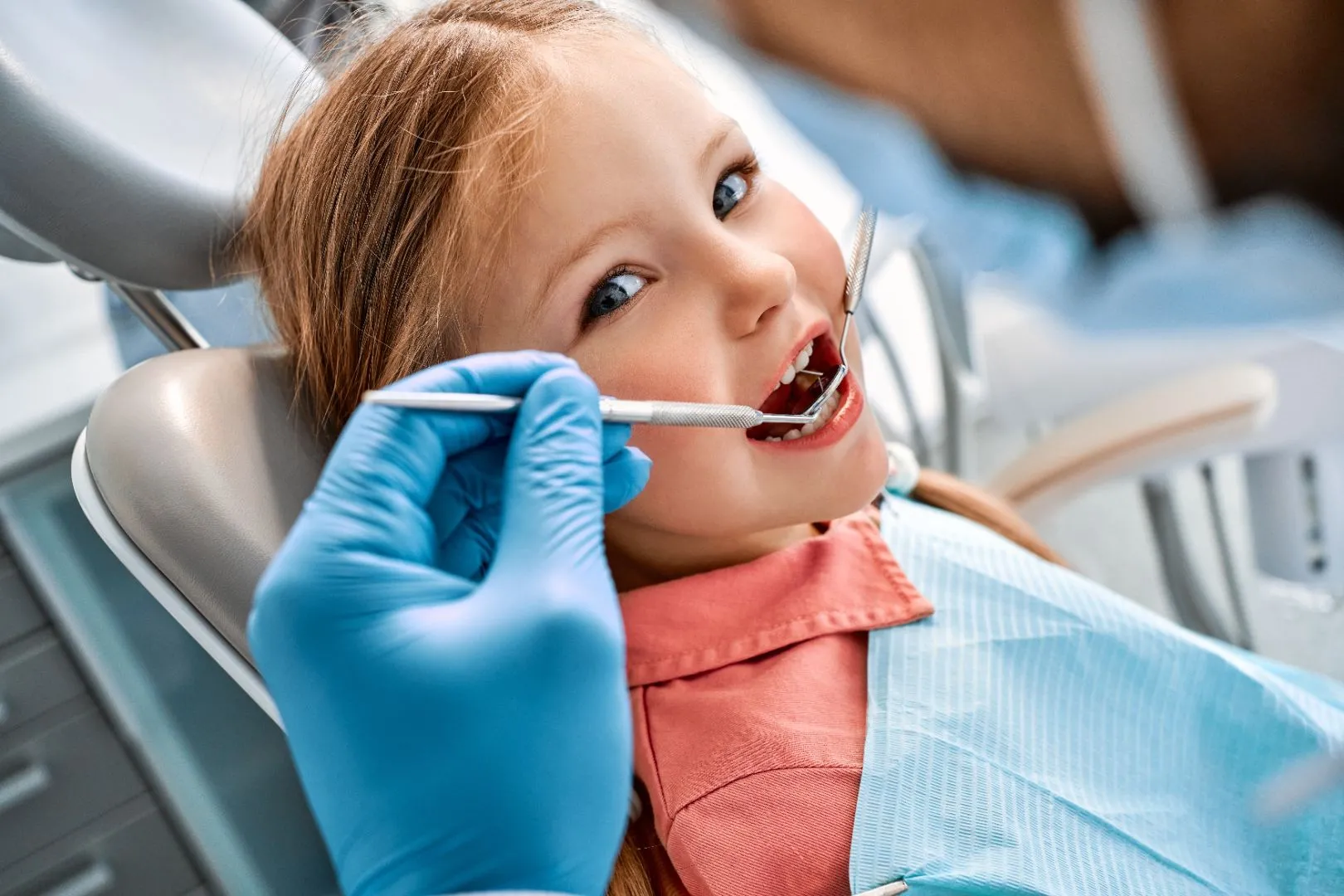
The American Association of Orthodontists recommends children have their first orthodontic evaluation by age 7. By this age, enough permanent teeth have come in for an orthodontist to detect subtle issues with jaw growth and tooth alignment, when those issues are easiest to address.
Most parents aren't sure when to schedule that first orthodontic visit, and the answer might surprise you. Many families assume they should wait until all the baby teeth fall out. But there's a better window, and it opens earlier than most people think. Here in Loudoun, families trust Hancock Orthodontics to help them figure out the right timing for their child's orthodontic care.
What Is an Early Orthodontic Evaluation?
An early orthodontic evaluation is a screening, not a commitment to braces or any treatment. Think of it like a wellness check for your child's developing smile. By age 7, your child has enough permanent teeth for Dr. Matt Hancock, a Board Certified Orthodontist in Leesburg, to spot subtle problems with jaw growth and tooth alignment that aren't always visible to parents or general dentists.
Most children evaluated at this age won't need immediate treatment. Dr. Hancock will monitor their growth over time and recommend treatment only when the timing is right.
Early detection matters because some orthodontic issues are easier to correct while your child is still growing. Jaw problems, crowding, and bite issues can be identified before they become more involved. This gives families more options and can mean shorter treatment time with braces or Invisalign in the teen years.
According to the AAO, roughly 25% to 50% of children benefit from some form of orthodontic treatment. That's a wide range, which is exactly why an early screening helps families know where their child falls.
What Happens at Your Child's First Orthodontic Visit
Your child's first orthodontic visit includes a visual exam, digital imaging, and a plain-language discussion of findings. The visit is quick, comfortable, and completely painless. No needles, no discomfort. Just a friendly conversation and a thorough look at how your child's smile is developing.
Here's what to expect:
- Visual examination. Dr. Hancock checks teeth, jaw alignment, and how the upper and lower teeth fit together when your child bites down.
- Digital imaging. X-rays or digital scans reveal what's happening beneath the surface, including developing teeth that haven't erupted yet and bone structure.
- Plain-language discussion. You'll get a clear explanation of any findings. No confusing jargon. Just honest information about what Dr. Hancock sees.
- A plan built around your child. Based on the evaluation, Dr. Hancock will either recommend monitoring over time or discuss Phase 1 treatment if early intervention would help.
One thing many parents don't realize: you don't need a referral from your dentist to see an orthodontist. You can schedule directly whenever you're ready.
This first visit is designed to be welcoming for kids and informative for parents. Your child gets comfortable with our team. And you walk out knowing exactly where their smile stands, with zero pressure to commit to anything.
Benefits of Seeing an Orthodontist by Age 7
At this age, early intervention makes the biggest difference. Your child's jaw is still growing and more responsive to guidance. That window matters. Certain problems are much easier to address now than later.
How Does Early Evaluation Guide Jaw Growth?
As a Board Certified Orthodontist, Dr. Hancock can use that natural growth window to guide development effectively. When a child's jaw is still developing, he creates room for permanent teeth by directing jaw growth. This reduces future crowding and prevents teeth from coming in crooked or blocked. Without this window, the jaw finishes growing before corrections can be made without more involved procedures.
Protruding front teeth also benefit from early attention. Teeth that stick out are more vulnerable to injury during sports and play, and early treatment reduces this risk significantly.
Can Early Treatment Simplify Future Orthodontic Work?
Yes. Addressing bite issues now shortens or simplifies Phase 2 treatment with modern braces or Invisalign later. Families who take advantage of early evaluation frequently find that the second phase of treatment is shorter and less involved.
These visits also catch harmful habits. Thumb-sucking, mouth breathing, and tongue-thrusting all affect jaw development. Spotting them early allows for gentle correction before lasting changes occur.
According to the American Association of Orthodontists, early treatment doesn't always mean early braces. Sometimes it means using simple appliances to guide growth while your child continues losing baby teeth naturally.
Dr. Hancock's goal isn't to rush treatment. It's to give your child every advantage for a healthy smile.
Early Evaluation vs. Waiting Until All Permanent Teeth Erupt
Early evaluation at age 7 gives families more treatment options than waiting until age 11 to 13. Some parents wonder if they should hold off until all the baby teeth are gone before seeing an orthodontist. It's a fair question. Here's how the two approaches compare:
| Factor | Early Evaluation (Age 7) | Waiting (Age 11-13) |
|---|---|---|
| Jaw growth | Can guide growth while bones are still developing | Jaw growth may be finishing, limiting non-surgical options |
| Treatment complexity | Often simpler when issues are caught early | May require longer or more involved treatment |
| Tooth extractions | Early intervention creates space naturally | Extractions may be needed to address crowding |
| Surgery risk | Reduces likelihood of surgical correction | Severe jaw discrepancies may require surgery |
| Overall cost | Early intervention generally reduces total lifetime orthodontic costs, according to AAO guidance on interceptive treatment | Delayed treatment could result in higher total costs due to increased complexity |
| Monitoring | Most kids are simply monitored with no immediate treatment | Evaluation happens once problems are more established |
Not every child needs early treatment. Many children evaluated at age 7 will simply be monitored with periodic check-ins until the right time for modern braces or Invisalign. Dr. Matt Hancock, a Board Certified Orthodontist, will let you know exactly what your child needs, and just as importantly, what they don't.
The key difference is timing. An early evaluation gives you information and options. Waiting means potentially missing the window when certain corrections are easiest. For Loudoun families, that information alone is worth the visit.
What Does an Early Orthodontic Evaluation Cost?
At Hancock Orthodontics in Leesburg, the initial orthodontic evaluation for children is free. If Phase 1 treatment is recommended, costs vary based on the type of appliance, treatment length, and follow-up needs. Many dental insurance plans cover a portion of interceptive treatment.
Every child's situation is different, so we provide a specific estimate after the evaluation.
What many families find encouraging:
- Early intervention generally reduces total lifetime orthodontic costs by addressing problems before they grow more involved.
- Many dental insurance plans cover a portion of interceptive treatment for children. It's worth checking your plan's orthodontic benefits, as some policies distinguish between Phase 1 and Phase 2 coverage.
- HSA and FSA accounts usually work too.
- Monthly payment plans make treatment accessible for families at every budget level, and our team walks you through every cost detail before anything begins.
No financial pressure. The free consult is always available, and you'll never be surprised by a bill.
Signs Your Child Should See an Orthodontist Before Age 7
While age 7 is the general recommendation, some children benefit from an earlier visit. Trust your instincts. If something seems off, it's worth getting checked. Parents in Loudoun bring their kids in for all kinds of reasons, and no concern is too small.
Watch for these signs:
- Early or late baby tooth loss. Losing baby teeth much earlier or later than peers signals development issues that deserve a closer look.
- Difficulty chewing or biting. If your child avoids certain foods or chews awkwardly, their bite may not be aligned properly. Some kids won't complain about it directly, so watch how they eat.
- Chronic mouth breathing. This one surprises a lot of parents. Mouth breathing affects jaw development and facial growth over time. Many families don't realize the connection between breathing patterns and orthodontic health until Dr. Hancock points it out.
- Crowded, misplaced, or blocked teeth. Teeth coming in crooked or in the wrong position deserve attention sooner rather than later.
- Uneven or shifting jaws. Jaws that don't look even, shift to one side, or make sounds when opening need evaluation.
- Thumb-sucking or tongue-thrusting past age 4. These habits push teeth out of alignment gradually but respond well to early, gentle correction.
If you notice any of these, don't wait until age 7. Schedule a visit at Hancock Orthodontics so Dr. Hancock can take a look and give you peace of mind.
Frequently Asked Questions About Your Child's First Orthodontic Visit
Can a child see an orthodontist before age 7?
If you or your dentist notice concerns earlier, bring your child in. Some issues are visible as early as age 4 or 5. There's no minimum age for an evaluation, and early detection is always better than wondering.
Does my child need a referral to see an orthodontist?
No referral is needed. You can call Hancock Orthodontics or request a free consult directly. While dentists often recommend orthodontic evaluations, you don't have to wait for that referral to get on the schedule.
What is two-phase orthodontic treatment?
Two-phase treatment addresses problems in stages. Phase 1 focuses on jaw alignment while baby teeth remain. Phase 2 straightens permanent teeth in the teen years using modern braces or Invisalign.
Will my child definitely need braces after an early evaluation?
Many children evaluated at age 7 are simply monitored over time. Dr. Hancock only recommends treatment when it's truly beneficial. The evaluation gives you information, not an automatic treatment plan.
Is Invisalign an option for young children?
Invisalign First is specifically designed for growing children with a mix of baby and permanent teeth. It's a comfortable, removable option that works well for many young families in Loudoun. During your child's evaluation, Dr. Hancock will discuss whether Invisalign First might be right for their situation.
Whether your child needs treatment now, later, or not at all, you'll walk out of that first visit knowing exactly where things stand. Dr. Matt Hancock and our team at Hancock Orthodontics in Leesburg create positive experiences for young families while guiding healthy development. We treat every family with personalized care you can trust. Ready to find out where your child's smile stands? Request a free consult today.