

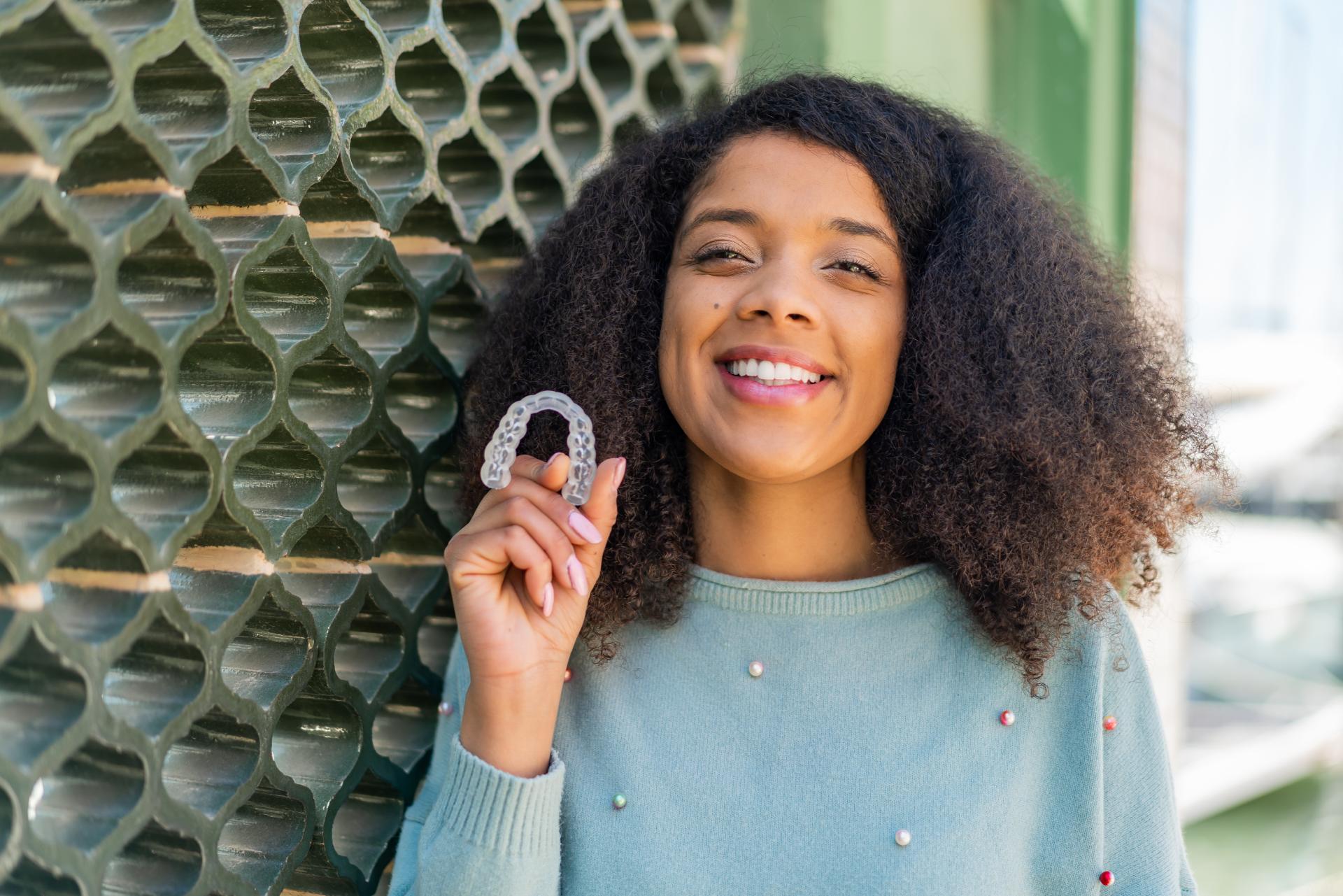
Invisalign for teens uses a series of clear, removable aligners, each worn for about a week, to move teeth gradually. It works well for many teens, but only when the aligners are worn as directed, so parent support and teen responsibility matter.
At Hancock Orthodontics, Dr. Matt Hancock is a Platinum Plus Invisalign provider and treats teens at our Leesburg and Winchester offices. Parents often ask us the same practical questions: will my teen actually wear them, what happens if one gets lost, and can they still play sports? Here is what we tell families before they decide.
How Does Invisalign Work for Teens?
It starts with a digital scan
Instead of messy putty molds, we use the iTero scanner, a small handheld wand that creates a detailed 3D digital model of the teeth and bite. Dr. Hancock uses that model to plan how each tooth should move, step by step.
A new set of aligners about every week
Based on the plan, custom aligners are made to fit your teen's teeth. Each set is worn for about a week before moving to the next one in the series. Little by little, the aligners shift the teeth toward their planned positions.
Periodic check-ins
Your teen will visit our office periodically so Dr. Hancock can confirm the teeth are tracking as planned. Invisalign generally requires fewer adjustment visits than braces, which helps with busy school and activity schedules. You can read more about the process on our Invisalign page.
What Problems Can Invisalign Treat in Teens?
More than minor crowding
Invisalign can address crowded or crooked teeth, gaps between teeth, overbites, underbites and crossbites. Dr. Hancock's experience as a Platinum Plus provider means many complex cases can also be treated with aligners.
When braces may be the better choice
Some bite problems or habits are better handled with braces. If that is the case for your teen, Dr. Hancock will say so and explain why. Families can compare options on our braces page.
How Many Hours a Day Do Teens Need to Wear Aligners?
Wear time drives results
Aligners only move teeth while they are in the mouth. Patients are typically asked to wear them about 20 to 22 hours a day, taking them out only to eat, drink anything other than water, brush and floss.
What happens when they sit in the case
Skipped hours add up. An aligner that is not worn enough may not fit well when it is time for the next set, and treatment can slow down. This is the most important conversation to have with your teen before starting.
Is My Teen Responsible Enough for Invisalign?
Signs a teen is ready
Teens who keep track of their phone, sports gear and homework without constant reminders usually do well with aligners. Teens who want a discreet option are often the most motivated to wear them.
Ways parents can help
A few simple habits make a big difference:
- Keep the aligner case in the same spot at home and in the backpack
- Put aligners back in right after meals and snacks
- Set phone reminders for the first few weeks
- Check in casually rather than nagging
- Keep the previous set of aligners in case one goes missing
Honest expectations
If your teen has struggled with retainers or other removable appliances before, mention it at the consultation. Fixed braces may be the less stressful route for some families.
What Should Parents Know About Day-to-Day Life With Aligners?
A daily snapshot
| Part of the day | What your teen does |
|---|---|
| Morning | Remove aligners, eat breakfast, brush, put aligners back in |
| School lunch | Store aligners in the case, eat, rinse or brush, reinsert |
| Practice or games | Keep aligners in or use a mouthguard as advised |
| After school snacks | Remove aligners first, then brush or rinse before reinserting |
| Bedtime | Brush and floss, clean aligners, wear them overnight |
Food freedom
Because the aligners come out for meals, there is no list of foods to avoid the way there is with braces. Teens can still enjoy pizza, popcorn and apples. The rule is to remove the aligners before eating and clean the teeth before putting them back in.
Speaking and comfort
The aligners are made from smooth, BPA-free plastic and are custom-designed for a snug fit, which reduces irritation to the gums and cheeks. Some teens notice a slight lisp for the first day or two, which usually fades quickly.
What Happens if My Teen Loses an Aligner?
First steps
Call our office and let us know. In many cases, your teen can go back to the previous set or move ahead to the next one while we decide what is best. Do not simply wait until the next visit without telling us.
Preventing losses
Most lost aligners end up wrapped in a napkin on a lunch tray. Teaching your teen to always use the case, even for a quick snack, prevents the majority of losses.
Can Teens Play Sports and Instruments With Invisalign?
Sports
Many teens wear their aligners during practice, and they offer some protection on their own. For contact sports, ask our team whether a separate mouthguard is a better choice for your teen's sport.
Band and choir
Wind instrument players often adjust within a few days. If your teen removes aligners to play, they should go right back in afterward.
How Do Teens Keep Aligners and Teeth Clean?
Simple cleaning habits
Brush the aligners gently with cool water and a soft toothbrush each morning and evening. Avoid hot water, which can warp the plastic. Brush the teeth before reinserting aligners so food is not trapped against the enamel.
Support from our practice
Every patient receives an oral hygiene home care kit when treatment begins. Our token reward program also lets teens earn rewards at visits for clean teeth and healthy gums.
How Do We Help Families Get Started?
A free consultation with a preview
At your visit, Dr. Hancock evaluates your teen's teeth, jaw and bite. The iTero scan can show a virtual preview of the projected smile, which many teens find motivating. Learn more about our tools on the technology page.
Payment and insurance help
We offer interest-free flexible payment plans and help families maximize their insurance coverage. Learn more about what sets us apart and visit our patient resources for forms and details.
Next step
If you think aligners might be right for your teen, schedule a free consultation in Leesburg or Winchester and bring your questions.
Frequently Asked Questions
At what age can teens start Invisalign?
Many teens start once most of their permanent teeth have come in. Dr. Hancock also treats some younger children with Invisalign for kids, so the right timing depends on your child's development.
Does Invisalign hurt?
Most teens feel pressure or mild soreness for a day or two when switching to a new set. That feeling is a sign the aligners are working, and it typically fades quickly.
Can my teen chew gum with aligners in?
No. Gum sticks to aligners and can damage them. Your teen should remove the aligners before chewing anything.
Is Invisalign or braces faster for teens?
It depends on the case and on how consistently the aligners are worn. Dr. Hancock will give you an estimated timeline for each option at the consultation.